Most dropshippers treat TikTok virality as a buying signal when it is often already a late-stage indicator. This article explains how to look upstream at paid ad activity, advertiser entry, creative maturity, spend acceleration, and rate-of-change metrics to identify product opportunities earlier. It provides a practical scoring system and 48-hour audit to help dropshippers decide whether a viral product still has enough margin and market runway before entering.

Our spy tools monitor millions of TikTok ads from over 55+ countries. Biggest TikTok Ad Library in E-commerce and Mobile Apps!
AI search visibility tells marketers whether their brand is being mentioned, but it does not reveal what happens when high-intent buyers move from an AI-generated answer toward comparison and conversion. This article argues that competitor ad activity can provide a valuable second layer of intelligence, revealing shifts in messaging, landing-page structure, offers, and channel strategy. By combining AEO visibility data with competitive ad intelligence, marketers can build a fuller picture of the AI-driven buyer journey—from awareness through conversion.
AI agents are becoming a new layer between advertisers and consumers, researching products, comparing options, and shaping which brands make the final shortlist. This article explores how marketers can use competitive ad intelligence to identify emerging agent-friendly patterns, balance machine-readable information with human-focused creative, avoid the risks of full automation, and rethink attribution as AI-mediated discovery makes traditional performance metrics less reliable.
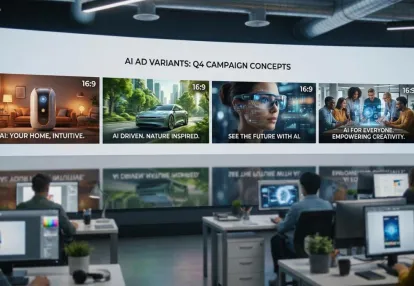
AI has enabled advertisers to generate creative at a scale that manual competitor research can no longer track effectively. Instead of reviewing individual ads, marketers need to analyze the full creative landscape, filter out short-lived tests, identify long-running survivors, and map the patterns behind winning hooks, visuals, and offers. This article presents a competitive intelligence framework for turning thousands of AI-generated ad variants into actionable strategic insights.
AI has made it easier to produce advertising creative at scale, but more output without better evaluation can simply create more waste. This article explores the volume trap, unreliable measurement, fragmented workflows, and the missing competitive intelligence layer that AI-generated advertising needs. Its core argument is that AI should not just accelerate creative production—it should be supported by competitive benchmarking and stronger feedback systems that help marketers determine which ideas are actually worth scaling.
Google has made AI-driven creative generation, testing, and optimization the new baseline inside its advertising ecosystem, while many native advertisers still rely on manual workflows and guesswork. This article explains how independent marketers can use ad spy tools, AI creative tools, and structured testing to build a similar observe → extract → generate → test → scale optimization loop without giving up control to a closed platform.
Google’s AI Overviews are reducing the clicks publishers and marketers receive from organic search, weakening the economics of SEO-dependent acquisition. The article argues that this shift creates a stronger case for native advertising, where marketers can buy distribution directly, control creative and landing pages, and reduce dependence on Google’s changing ecosystem. It also presents a five-step playbook for measuring SEO exposure, researching proven native campaigns, testing native content, and building a more diversified distribution strategy.
Platform changes can disrupt profitable campaigns before advertisers even understand what changed. By monitoring competitor creative shifts, campaign longevity, geographic movement, and channel changes through ad intelligence, performance marketers can spot early signals of algorithm updates, policy changes, and shifting auction dynamics—giving them time to adapt before the impact reaches their own campaigns.
AI has made ad production faster and cheaper, but it is also pushing brands toward increasingly similar creative. As generic AI output fills the market, competitive ad intelligence becomes the missing input: marketers can identify saturated patterns, find emerging opportunities, and give AI real market context before generating new creative. The result is a repeatable process for creating ads that are differentiated rather than simply more numerous.
AI has made ad creation faster, cheaper, and more accessible, but that advantage is quickly becoming universal. As creative production becomes commoditized, competitive intelligence becomes more important—not less. By tracking what competitors are actually running, where they are investing, and which creative patterns persist, marketers can give AI better strategic inputs and avoid producing more of the same.
AI can help marketers with research, content planning, and brand monitoring, but it cannot see the live landing pages competitors are using to generate conversions today. The strongest competitive advantage comes from combining AI with real-time landing page intelligence—analyzing active campaigns, proven offer structures, and conversion-focused page designs to make decisions based on live market evidence rather than outdated AI training data.
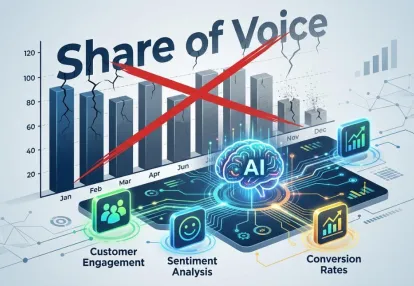
AI Share of Voice is valuable for brand marketers focused on visibility, but it offers little practical value for performance marketers who compete in paid advertising auctions. Instead, advertisers should track competitive ad presence—campaign longevity, geographic expansion, creative volume, and network coverage—to identify proven offers, discover scalable markets, and make faster media buying decisions based on real advertising activity rather than fluctuating AI citations.
The 2026 FIFA World Cup presents one of the biggest opportunities for performance marketers, with millions of fans engaging across digital channels beyond the stadium. By using competitive ad intelligence to monitor native campaigns, analyze landing pages, and track emerging creative trends in real time, affiliates can capitalize on shifting fan behavior and launch profitable campaigns before competitors react.